Read and write Jira data in SSIS with dedicated API Source and API Destination components.
Configure Jira authentication using API Key, PAT, or OAuth, select endpoints, preview payloads, and map data for issues, projects, worklogs, and comments in a guided setup flow.
Part of ZappySys SSIS PowerPack (100+ connectors & tasks).
⚡ Key Benefits
- Bi-Directional Jira Flows — Extract and load Jira records in the same SSIS data flow design pattern
- Authentication Flexibility — Use API Key, PAT, or OAuth based on Jira security policies
- Endpoint-Driven Access — Select operations and preview response data before package execution
- Mapping-Centric Writes — Configure source-to-target mappings for issue and project write scenarios
- Throttling-Aware Execution — Apply retry controls for status code 429 and transient API limits
📸 Visual Overview & Setup
|
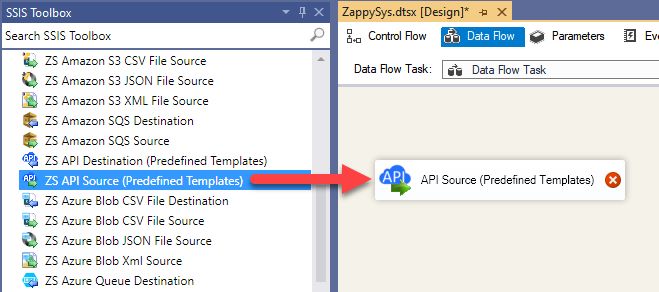
1. Drag API Source from Toolbox
|
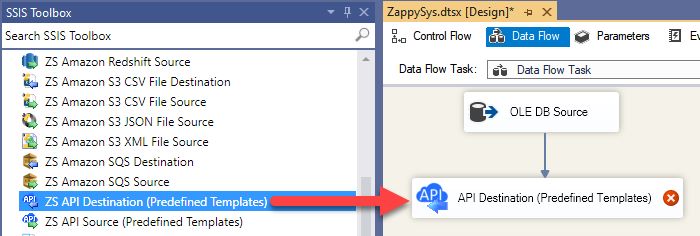
2. Drag API Destination from Toolbox
|
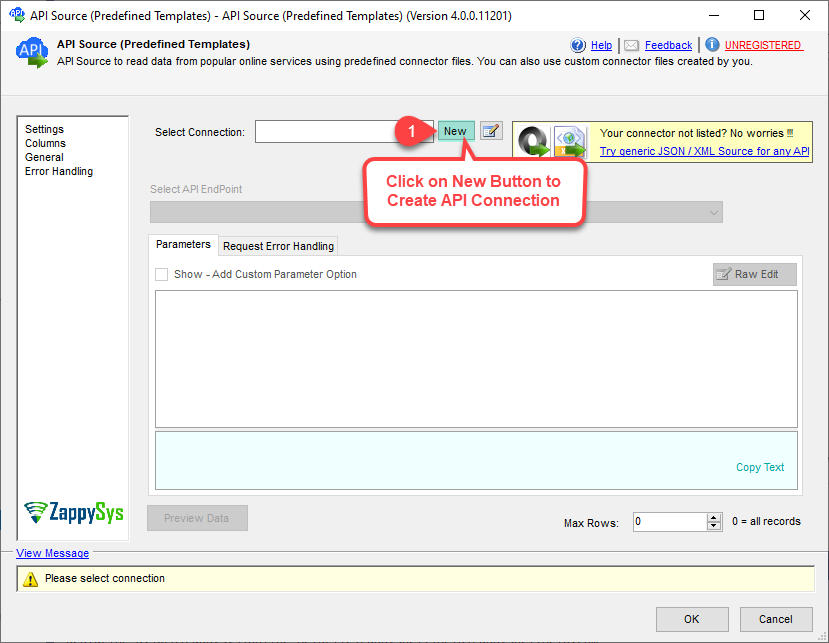
3. Pick or Create Jira Connector
|
|
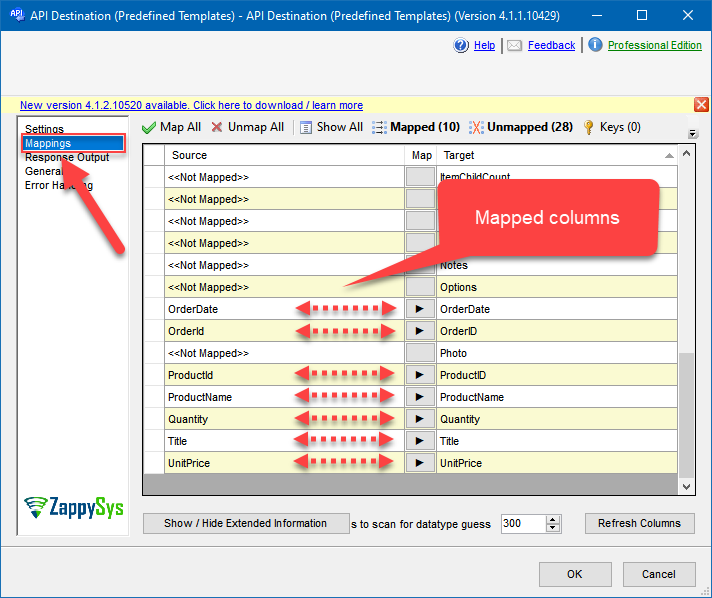
4. Map the Columns
|
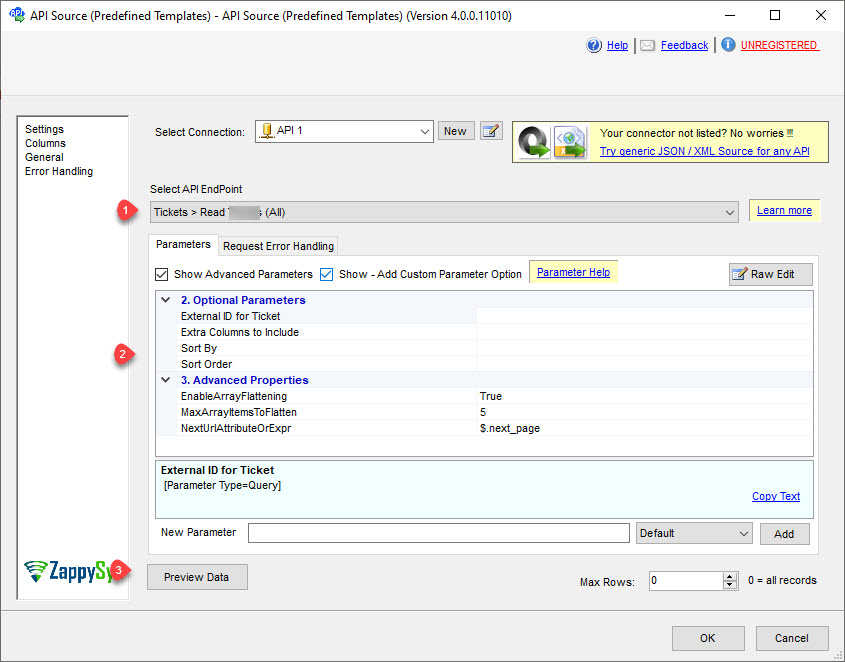
5. Select Endpoint and Preview data
|
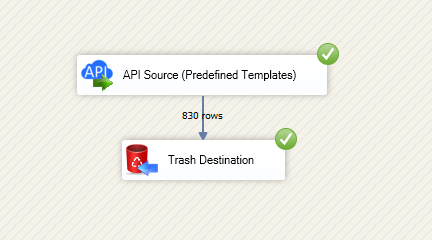
6. Destination Mapping & Execute
|
🔧 Key Features
Read + Write Jira Operations
- Use API Source to extract Jira entities for downstream ETL and analytics
- Use API Destination to insert, update, delete, and lookup records through mappings
- Build integrated issue, project, comment, and worklog workflows in SSIS
Authentication Options
- API Key based authentication using Atlassian user email and API token
- PAT authentication for bearer-token based Jira access patterns
- OAuth flow with scope-based app permissions and token generation
Configuration and Control
- Select connectors from Popular list, Search Online, or saved connector files
- Adjust API base URL and request parameters per environment needs
- Use retry controls for status-code based throttling protection
Operational Integration
- Preview endpoint responses before execution to validate payload structure
- Map source and target fields in visual mapping tabs
- Deploy packages to SQL Server Catalog or Azure-SSIS IR for production scheduling
💡 Common Use Cases
Real-world scenarios for SSIS Jira Connector:
- Issue Reporting Pipelines: Extract Jira issues into SQL-based marts for team KPI dashboards.
- Bidirectional Sync: Read operational updates from source systems and push mapped changes back to Jira.
- Project Data Consolidation: Collect projects, worklogs, and comments for cross-tool reporting.
- Automated Status Updates: Drive issue transitions and field updates from ETL job outcomes.
- Controlled API Throughput: Use retry settings to improve reliability under Jira API rate limits.
🎯 Summary
SSIS Jira Connector helps ETL teams read and write Jira data through a guided API Source and API Destination workflow in SSIS.
You get multiple authentication modes, endpoint-driven extraction, mapping-based writes, and deployment-ready package patterns.

Start Integrating Jira with SSIS PowerPack
Build read and write Jira pipelines with prebuilt API connectors and visual mapping.
Full functionality is FREE for development within Visual Studio